
Water and Soil Management (Environmental Engineering)
The consequences of climate change are in the news almost every day. Clean drinking water and fertile soils can no longer be taken for granted.
In a world threatened by droughts, floods and the loss of fertile soils, the management of water and soil is becoming a crucial task. Climate change is causing temperatures to rise and rainfall to become unpredictable. This has far-reaching consequences for agriculture, water supply and the preservation of our ecosystems. The Bachelor's degree programme in Water and Soil Management (Environmental Engineering) offers a unique opportunity to tackle the pressing environmental problems of our time.
Facts at a glance
Secure your place and apply for Water and Soil Management (Environmental Engineering)!
Just want to save the world?
Study water and soil management (environmental engineering) at the Suderburg campus!
Water and soil management - be part of the solution!


Your cookie settings have blocked this video.
Details of the degree programme
Fields of activity
Your specialist knowledge and ability to take a networked approach in the fields of sustainability , contaminated site remediation , climate impact management , urban water management and flood protection is in demand. The course opens up outstanding career prospects in engineering offices, environmental authorities, research institutions, municipal associations and international organisations.
Employer
- Engineering/planning offices, construction companies, public administration, water boards, water supply and disposal companies, waste management, environmental management, environmental consulting, sustainability management, teaching and research, international development cooperation
- Sustainable development, planning, implementation and maintenance of projects in flood defence and coastal protection, water management, hydraulic engineering, urban water management and agricultural irrigation
- Monitoring and assessment of environmental impacts
- Remediation of contaminated sites and circular economy
Programme content
Study programme and course content
The content of the Bachelor's degree programme "Water and Soil Management (Environmental Engineering)" can be divided into the areas of " Hydraulic Engineering ", " Urban Water Management " and " Soil Management and Circular Economy ", which are underpinned by engineering fundamentals and deepened individually with compulsory electives. In projects, laboratory work and excursions, you will supplement the theoretical knowledge of the lectures with practical experience and skills.
- 1. until 2nd semester: basic studies together with the Civil Engineering degree programme
- 3. to 6th semester: specialisation with a focus on hydraulic engineering, urban water management, soil management and circular economy
- 7. 2nd semester: practical phase, Bachelor's thesis and colloquium
Hydraulic engineering modules and in-depth electives (WPF)
- Hydraulic engineering, agricultural hydraulic engineering, hydrology and hydromechanics
- Natural hydraulic engineering and river basin management
- Coastal engineering and flood risk management
- Sustainable construction in hydraulic and civil engineering
- Hydropower plants / dams
- WPF Hydraulic engineering experimentation
- WPF Natural measurements in hydraulic engineering
Urban water management modules (SiWaWi) and in-depth electives (WPF)
- Water supply, urban drainage, stormwater and sewerage operations
- Wastewater treatment and water protection
- Water/wastewater process engineering
- Construction and inspection of pipes and sewers
- WPF Hydraulics and special topics in wastewater technology
- WPF Simulation modelling urban drainage
- WPF Digitalisation and geodata management
Soil management and circular economy modules and in-depth electives (WPF)
- Applied soil science, preventive soil protection, water and soil analysis
- Introduction to geotechnics, soil mechanics, hydrogeology and groundwater management
- Water ecology / landscape ecology
- Remediation of contaminated sites and soil management, recycling and waste management
- WPF Permaculture
- WPF Soil science construction monitoring
Modules in engineering fundamentals
- Engineering surveying and GIS
- Building materials science
- Mathematics and statistics
- CAD
- Engineering biology and environmental technology
- Mechanics
- Modelling and simulation
- Construction operations and project management
- Environmental law
Practical learning
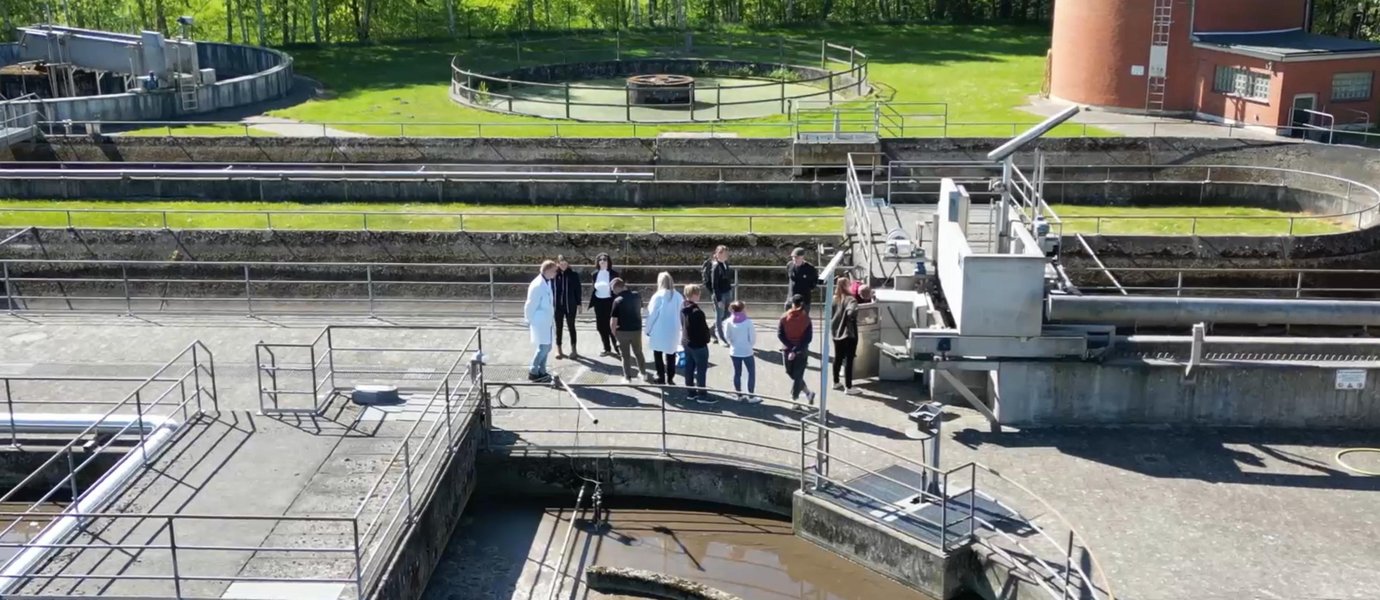
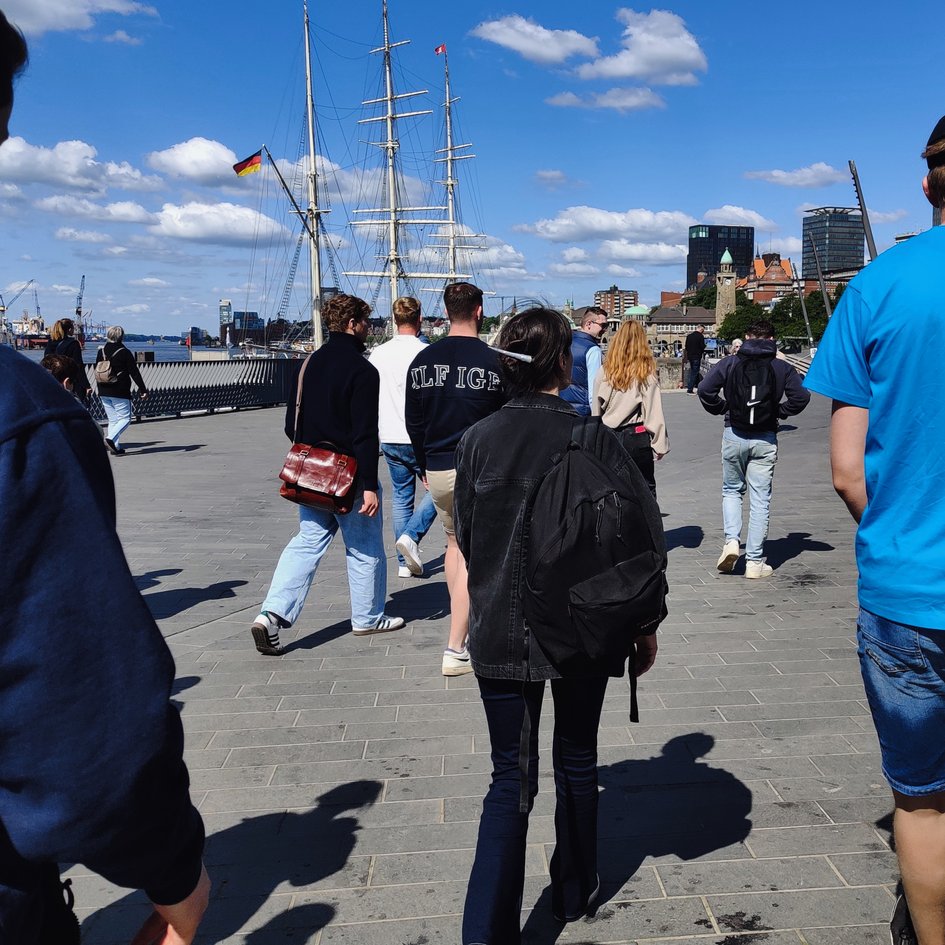
The degree programme is geared towards the requirements of the future working world and focuses on a broad education and the ability to think in a networked way. Teaching does not only take place in the lecture theatre, but is also characterised by a large number of laboratory practicals, field work and excursions.
With the INBW and the CHH , we have two recognised strong research institutions on the Suderburg campus in the field of water and soil management. As part of the research projects, students also have the opportunity to apply and develop what they have learnt as research assistants (Hiwis).
Study programme with practical experience
In addition to the normal full-time degree programme, we also offer the Water and Soil Management (Environmental Engineering) degree programme with practical work experience . Alongside your studies, you will be employed as a working student at one of our co-operation partners .
The advantages for you are obvious. You will already be working in a company alongside your studies. This offers you the opportunity to deepen your knowledge of the programme, financial security and a secure future. Our timetable is designed so that you spend four days at the university during the lecture period and one day a week working in the company, for example.
After the Bachelor
Study plan
1. Semester
: Currently showing overview. : Currently showing detail view.- 1.1 Fundamentals of mechanics
- 1.2 Fundamentals of hydraulic engineering and hydrology
- 1.3 Geoinformation systems GIS / BIM
- 1.4 Fundamentals of maths and statistics
- 1.5 Engineering fundamentals Physics, Chemistry
- 1.6 Biology and environmental biotechnology
2. Semester
: Currently showing overview. : Currently showing detail view.- 2.1 Strength theory, dimensioning
- 2.2 Hydromechanics
- 2.3 Technical visualisation and CAD / BIM
- 2.4 Maths for engineers
- 2.5 Building materials science
- 2.6 Engineering surveying
3. Semester
: Currently showing overview. : Currently showing detail view.- 3.1 Applied soil science
- 3.2 Water and landscape ecology
- 3.3 Modelling and simulation
- 3.4 Urban drainage
- 3.5 Computer applications for engineers
- 3.6 Construction operations and project management
4. Semester short
: Currently showing overview. : Currently showing detail view.- 4.1 Preventive soil protection
- 4.2 Water protection and wastewater treatment
- 4.3 Near-natural hydraulic engineering and river basin management
- 4.4 Stormwater and sewer operations
- 4.5 Water and soil analysis
- 4.6 Introduction to geotechnics
5. Semester
: Currently showing overview. : Currently showing detail view.- 5.1 Agricultural hydraulic engineering
- 5.2 Compulsory elective module from catalogue
- 5.3 Hydrogeology and groundwater management
- 5.4 Water supply
- 5.5 Remediation of contaminated sites and soil management
- 5.6 Compulsory elective module from catalogue
6. Semester
: Currently showing overview. : Currently showing detail view.- 6.1 compulsory elective module from the catalogue
- 6.2 Process and I&C technology Water/waste water
- 6.3 Compulsory elective module from catalogue
- 6.4 Flood risk management and coastal engineering
- 6.5 Recycling and waste management
- 6.6 Environmental law
7. Semester
: Currently showing overview. : Currently showing detail view.- 7.1 practical project
- 7.2 Bachelor's thesis with colloquium
5 reasons to study Water and Soil Management (Environmental Engineering)
- 1.
Above-average career opportunities
With a Bachelor's degree in Water and Soil Management, you won't have to go through a marathon application process.
- 2.
Relevant for the future
Sufficient drinking water and healthy soils can no longer be taken for granted, but require broad knowledge and well thought-out solutions.
- 3.
Networked thinking
You will learn to understand interactions and dependencies, both locally and globally.
- 4.
Actively tackling climate change
With climate impact engineering, you will tackle the consequences of climate change and ensure an improvement in the future.
- 5.
Study programme with practical experience (work-study programme)
Also possible as a degree programme with practical involvement with a partner company (work-study programme).
Useful links and files
Good to know
Starting in the summer semester (March)
If you are starting in the summer semester (March), please email our Dean of Studies (opens your email program) in advance to arrange an information meeting , as the programme starts in the second semester.
Starting in the winter semester (September)
We recommend taking part in the respective preliminary courses (external link, opens in a new window) to refresh or deepen your knowledge. Registration is required in advance.
Accommodation
In Suderburg and in the nearby Hanseatic town of Uelzen, there is a wide range of affordable accommodation for our students at the Suderburg campus. The offer ranges from shared rooms to single rooms and flats.